

Raw material reception
Verification of volume and primary indicators


.png)


.png)
You can additionally monetize oil cake by converting it into more liquid products.


Fuel briquettes are densely pressed biofuel made from plant-based raw materials for efficient combustion.
Have high calorific value and low moisture content, ensuring stable burning.
Usage:
Suitable for solid-fuel boilers, industrial facilities and residential heating.
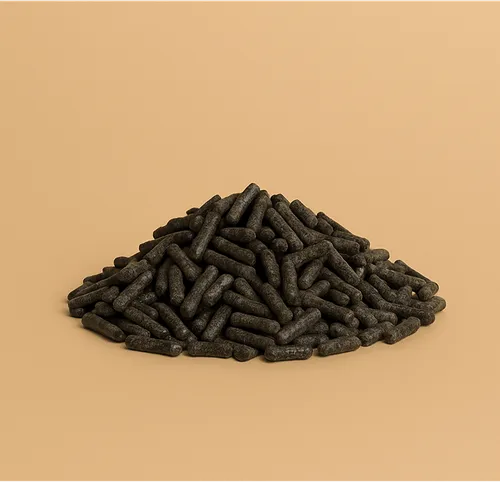
Fuel pellets are a biofuel made from pressed agricultural waste, used for heating.
Characterized by stable calorific value and ease of storage and transportation.
Usage:
Suitable for boilers, private households and enterprises using alternative fuel.

Technical oil is a product of oilseed processing intended for industrial use.
Used as a raw material for the production of biofuel, lubricants and other technical products.
Usage:
Suitable for industrial enterprises, biofuel producers and processing companies.

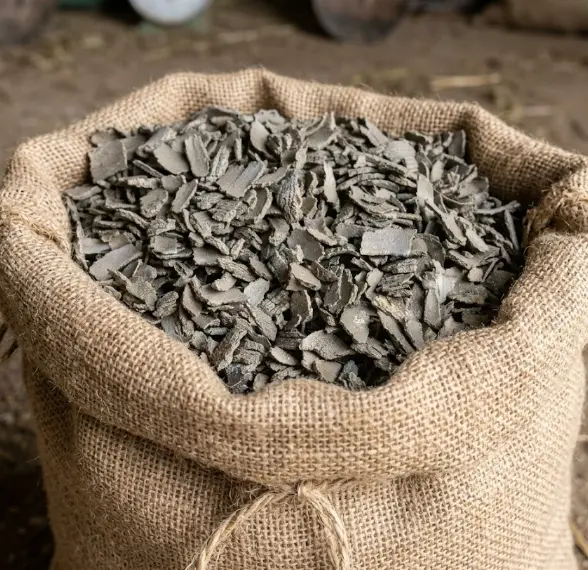
Food-grade meal is a deeply processed oilcake product used as a raw material in the food industry.
Has reduced fat content and stable quality indicators thanks to additional oil extraction during processing.
Usage:
Suitable for food enterprises and manufacturers using plant-based protein components in production.
.svg)
.svg)

.svg)
.svg)
.svg)
.svg)
The client independently ensures the supply of sunflower seeds to the facility.
During extraction, additional oil is extracted from the oil cake, allowing maximum use of the raw material.
The plant is responsible for receiving, storing, and processing raw materials, quality control, and shipment of finished products.
Processing is carried out using solvent extraction in a closed production cycle.
Yes, the oil cake undergoes laboratory testing before processing to assess its quality indicators.
Processing costs are determined individually based on the volume of raw materials, their quality, and the terms of cooperation.
Tolling meal processing with receipt of finished products and quality control at all stages.
.svg)
.svg)
Tolling meal processing is a convenient cooperation model for businesses that want to work with their own raw materials without investing in a separate production base, staff, or technological infrastructure. You transfer a batch of meal to our production facilities, and we organize its processing within a clear contractual model focused on process control, quality, and work predictability.
This approach allows you to maintain control over the raw material and processing output without building your own production loop from scratch. This is especially important for companies that work with meal batches regularly, plan deliveries in advance, and want to reduce their operational burden.
We structure cooperation so that processing is not a standalone technical operation but part of a convenient production route for your batch. Intake, storage, weighing, quality control, and logistics support must work as a unified system. This approach makes tolling meal processing a practical solution for B2B partners who need stability, process controllability, and a clear output result.
Transferring meal for processing is profitable when what matters to you is not simply selling raw material but obtaining a specific processed product within a clear commercial model. This format suits agricultural producers, traders, commodity batch owners, and companies operating in the B2B segment that want to use processing as part of their operational strategy.
The solution is especially relevant if you work with regular batches, seasonal volumes, or contract deliveries where timelines, predictability, and convenient coordination of all stages are important. In such cases, you need not just the service itself but a partner with whom you can plan work without constant disruptions, manual control, and wasted time on organizational details.
Tolling processing is also advantageous when you do not want to invest resources in your own processing infrastructure but wish to retain control over the batch and the result. Instead of capital expenditure on launching a separate line, you work with already-operating production capacity where the process is organized and ancillary tasks—from intake to dispatch—are handled within a single facility.
We accept both standard and technical meal for processing. This lets you choose the working format depending on the type of raw material and the output result you want to achieve.
Standard meal is suitable for processing into oil and food-grade meal. This option is relevant for businesses that need processed products with a clearly understood commercial application.
Technical meal involves a different processing scenario. In this case the output is technical oil, and the meal residue can be further processed into fuel briquettes and pellets. This provides more flexibility when working with technical raw materials and allows its use in a separate production direction.
This distinction matters right from the start of cooperation, as it allows the batch route to be organized correctly, the expected result to be defined, and the process to be built without unnecessary clarifications once work has begun.
The processing result depends on the type of meal transferred for work. For standard meal the output is oil and food-grade meal. For technical meal the output is technical oil, and the residue can be further processed into fuel briquettes and pellets.
For your business this means you understand the process goal before work on the batch begins. You are not transferring raw material into an abstract process but toward a specific task and a specific output product. This simplifies planning, provides more certainty in batch work, and allows you to connect processing directly to further commercial decisions.
That is why the output product section has not a formal but a direct practical significance. When the raw-material type and processing result are clear in advance, it is easier to coordinate logistics, prepare for dispatch, and organize work without unnecessary uncertainty.
Meal processing at our production facilities is built as a sequential, controllable process. We first receive and weigh the batch, determine the meal type, and assess its key parameters. This allows us to organize subsequent work with the raw material correctly from the outset and to understand what result the batch is being launched toward.
After intake, the raw material enters the production cycle, where the oil fraction is extracted and the residual product is further processed. Depending on meal type and the task set, the output is oil and meal of the appropriate grade. For technical meal, further use of the residue for producing fuel briquettes and pellets is also possible.
This approach allows us to organize processing not chaotically but along a clear production route where each stage is linked to the final result. For you this means more predictable batch work, fewer operational gaps, and better process controllability overall.
Processing price is an important criterion but insufficient on its own for a well-informed B2B decision. Evaluating a contractor by rate alone makes it easy to miss factors that then directly affect timelines, work convenience, batch coordination, and the overall commercial result. What matters is not only the service cost but how intake, accounting, quality control, storage, and dispatch are organized.
A lower price does not always mean better cooperation. If it comes with weak process organization, non-transparent weighing, absent laboratory support, or logistics problems, part of the benefit quickly disappears in actual operations. In practice this translates into delays, more complex approvals, additional manual control, and excess burden on your team.
That is why when choosing a contractor it is worth looking more broadly: how quickly and clearly batch intake is organized, whether there is adequate storage, whether ancillary tasks can be handled without multiple contractors, and how stably the production route operates under seasonal load. In the end, what is advantageous is not simply cheaper processing but cooperation in which you receive control, predictability, and fewer operational risks.
By transferring meal to our production facilities, you receive not only the processing service itself but a more controlled way of working with the batch. For you this means simpler stage coordination, fewer gaps between intake, storage, quality control, and dispatch, and more predictable overall process organization.
We use automated intake, weighing equipment, a production and technology laboratory, storage infrastructure, and our own fleet. This allows us to better control the movement of raw materials and finished products, and allows you to work with a plant where the production route is not assembled piecemeal but is already built as a unified system.
For your business this means a more convenient and stable cooperation model. You can rely on a systematic approach to the batch, clear contractual interaction, and ancillary services that help reduce operational burden. When meal processing is performed at real production facilities with proper infrastructure, it is easier to plan deliveries, coordinate work, and make commercial decisions based on a predictable process.
In tolling meal processing, what matters is not only the production process itself but how precisely intake, accounting, and batch quality control are organized. These stages give you an understanding of what raw material you are working with, how it is assessed, and how predictable further cooperation will be.
Correct weighing, clear accounting, and laboratory control help avoid unnecessary disputes and give you greater confidence from the very start of work on the batch. When key raw-material indicators are properly recorded and batch movement is systematically organized, it is easier to plan next steps, coordinate logistics, and make decisions without unnecessary uncertainty.
For business this has daily practical significance. Transparent accounting and quality control are not an add-on service for appearances' sake but the normal foundation for stable B2B cooperation, where what matters is not promises but a predictable and controllable process.
One of the most common mistakes is not distinguishing between standard and technical meal when formulating the task. If the raw material type is not defined at the outset, it is harder to organize the batch route correctly, agree on the expected result, and build the process without additional clarifications once work has begun.
Another typical mistake is evaluating processing solely by service price. In practice, a lower rate does not always mean a better commercial result. If it comes with weak intake organization, non-transparent accounting, absent laboratory control, or logistics problems, part of the benefit quickly disappears in delays, unnecessary approvals, and manual process management.
The condition of the batch before it is transferred for work should also be considered. If raw material enters the process without clear understanding of its key parameters and without proper route preparation, it complicates processing organization and makes cooperation less predictable. That is why when working with meal it is important to evaluate not only the service itself but how systematically the entire cooperation model is built.
Evaluating tolling meal processing solely by price per tonne is too narrow an approach for a B2B decision. Real cooperation viability is shaped by several factors simultaneously: raw-material intake quality, accounting accuracy, production process stability, logistics, turnaround times, and a clear output result.
In practice, before starting cooperation, it is important to look at the entire batch route: how conveniently intake is organized, whether the meal type being transferred is clearly defined, how raw-material indicators are recorded, whether storage and transport can be handled within a single facility, and how stably the production process operates in season. These factors determine whether cooperation will truly be advantageous for your business, not just attractive on paper.
The commercially strong choice is not simply a service with a lower rate but cooperation in which you receive a clear process, a controlled batch, a predictable result, and fewer operational risks. In the longer term, this model gives the business more stability, flexibility, and work convenience.
We structure cooperation so that you can work conveniently with your meal batch not only at the processing stage but across the entire operational cycle. Intake, accumulation, storage, weighing, laboratory support, and transportation work as part of a single production loop. For you this means fewer gaps between stages, better coordination, and more predictable batch work.
We have over 20 years of experience, 500,000+ tonnes of processed raw materials, 200+ partners, and 98% of orders fulfilled on time. For you these are not just figures but an indicator that cooperation is built on real capacity, a systematic approach, and production discipline.
Working with us, you receive not just a standalone service but a more controlled cooperation model on real production facilities. This is what allows you to plan work with greater confidence, coordinate batches more accurately, and make commercial decisions based on a predictable process.
.webp)
The minimum processing volume is 1,000 tonnes of raw materials.
We accept both standard and technical meal suitable for further oil extraction.
Processing is carried out by the extraction method using a solvent in a closed production cycle.
Yes, the plant's production capacity allows handling large raw material volumes and providing stable processing.
Yes, the plant operates laboratory control of raw materials and finished products at every processing stage.
.webp)

.webp)
.svg)
.svg)
.webp)
.webp)
.webp)
.webp)
.webp)
.svg)