

Raw material reception
Verification of volume and primary indicators


.png)


.png)
Get finished products from your own raw materials without investing in processing capacity.
.png)

High-protein feed product
Protein — up to 38–40%. Low moisture and impurity content
Usage:
Feed for cattle, pigs and poultry
.png)
Natural product of agricultural processing
Residual oil content — up to 10%. High energy value
Usage:
Feed base and further processing
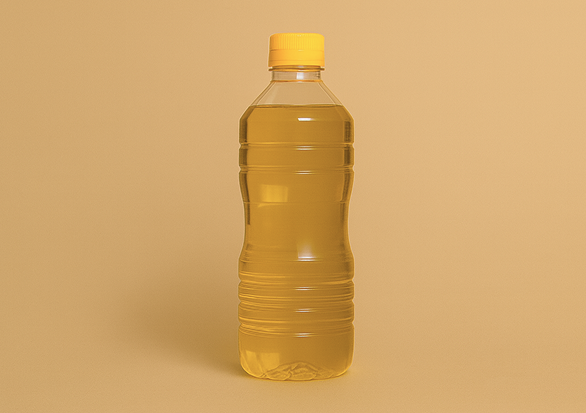
Unrefined oil
Food and industrial products with high quality standards
Usage:
Food industry, export, technical needs
.svg)
.svg)

.svg)
.svg)
.svg)
.svg)
The client independently ensures the supply of sunflower seeds to the facility.
This is a cooperation format in which the customer provides their own raw materials, and the enterprise processes them and returns the finished products.
The plant is responsible for receiving, storing, and processing raw materials, quality control, and shipment of finished products.
The cost depends on volumes, raw material quality, and the list of additional services (cleaning, drying, logistics).
A processing contract is drawn up, along with raw material acceptance and finished product shipment acts, as well as accompanying accounting documents.
.png)
Processing costs are determined individually based on the volume of raw materials, their quality, and the terms of cooperation.
Tolling sunflower seed processing with receipt of finished products and quality control at all stages.
.svg)
.svg)
Tolling sunflower seed processing is a cooperation model in which the client uses a facility's production capacity to obtain finished products without investing in their own plant, staff, processing line, or supporting infrastructure. For a B2B partner this is primarily about controlling batch economics, ensuring process predictability, and treating processing as a distinct business tool rather than a one-off service.
This format suits not only agricultural producers who want to process their own harvest, but also traders, commodity batch owners, and companies planning to receive sunflower oil, meal, or other by-products within a contractual model. The value of the tolling scheme lies not in the processing act itself but in the fact that the business retains control over raw materials and the output, gaining access to real production capacity, laboratory quality control, logistics, and the technological process.
When selecting a plant for tolling sunflower processing, the key question is not only the service rate. For a B2B client it is far more important how transparently raw material intake, quality control, accounting, the production route, and finished-product dispatch are organized. When these elements are built systematically, cooperation becomes predictable; when they are weak, even a formally attractive price can turn into additional losses.
In practice, partners typically evaluate several things simultaneously: whether the plant has real production capacity (not just a declarative service description); whether there is clear quality control at intake and during production; whether raw-material intake is organized so the client has no doubts about batch accounting; whether the plant can operate stably under seasonal load when disruptions are especially costly; and whether there are ancillary services that reduce the client's operational burden.
At Seedway Oil these factors are backed by a real production base. The company performs intake, accumulation, and storage at a dedicated complex, uses an automated intake system and truck scales, and has a production complex with an extraction shop, oil-pressing shop, boiler room, laboratory, silos, and product storage tanks. Daily processing capacity is up to 150 tonnes of sunflower seed, which for the client means not just "scale" but the real ability to work with batches in production mode rather than manually.
In tolling sunflower processing, profitability depends not only on contract terms but on how precisely the client understands the movement of their raw materials and the processing output. Transparent accounting, correct weighing, and quality control are needed not "for formality" but so the client can plan batch economics based on real data, not assumptions.
When raw materials are accepted without a clear accounting system, the partner faces the main risk—lack of full process control. When weak quality control is added, another problem arises: the actual processing result may differ from expectations not because of the contract but because of the seed's original characteristics. That is why it is critically important for the B2B client that the plant has its own laboratory base, clear raw-material testing procedures, and proper production control.
Seedway Oil directly reinforces this argument with facts. The company works with Ukrainian-origin sunflower seed that must meet DSTU 7011:2009 quality standards, and raw material and finished-product quality is controlled through its own production and technology laboratory. The plant also uses automated intake and weighing equipment, which is critically important for contract processing where accounting accuracy has direct commercial value for the client.
The most common mistake is evaluating the processing service solely by price. In practice, a low rate without adequate infrastructure, laboratory support, clear accounting, and organized logistics does not reduce costs—it simply shifts them into the hidden part of the process. The partner seemingly saves at the start but then encounters delays, coordination difficulties, non-transparent batch movement, or additional organizational expenses.
The second typical mistake is underestimating raw-material quality. Some clients treat seed quality requirements as a formality, even though the batch characteristics directly affect processing stability and the final result. A simple production principle applies: choosing a quick solution without proper raw-material inspection inevitably sacrifices forecast accuracy. What seems like a minor detail at dispatch actually turns into wasted time, more complex approvals, and weaker process control.
The third mistake is ignoring the role of logistics and production stability. If the plant lacks its own transportation or operates without sufficient technical organization, any disruption affects not only timelines but the partner's entire supply chain. At Seedway Oil this part of the process is reinforced by an in-house fleet of 18 vehicles—important not as an image figure but as a factor of operational independence and more predictable handling of raw materials and finished products.
Industrial-scale sunflower processing matters not in itself but because of the level of controllability it gives the client. For a B2B client this means a predictable production rhythm, stable process organization, a clear technical base, and less dependence on random factors. When the service is provided by a full-cycle plant, the client receives not a standalone operation but a production system where intake, preparation, pressing, extraction, quality control, and dispatch are interconnected.
At Seedway Oil this logic is confirmed by the plant's actual data. The company has a production complex with an oil extraction shop, oil-pressing shop, laboratory, silos, storage tanks, and auxiliary infrastructure. The technological process combines mechanical pressing and extraction; the production technology allows recovery of up to 98.9% of the oil contained in sunflower seed. If a batch has an oil content of 46%, the estimated yield from 1,000 kg of seed may be around 455 kg of oil—not an abstract technical detail for the partner but a reference point for understanding the processing potential and evaluating the commercial result.
Evaluating sunflower processing services solely by price per tonne is too narrow an approach for a B2B decision. The real viability of cooperation is shaped by a combination of factors: raw-material intake quality, accounting accuracy, production process stability, laboratory control level, logistics, turnaround times, and output predictability. For the business what matters is not only the cost of processing but how controllable the entire batch route will be from intake to receiving the processed products.
In practice, before starting cooperation, the partner should assess several basic things: how intake is organized, what parameters the raw materials are tested against, how weighing and accounting are conducted, which ancillary services can be handled within a single facility, and how predictable processing and dispatch timelines will be. These parameters allow the partner to understand whether cooperation will be operationally convenient, especially if the business plans regular, seasonal, or contract deliveries.
An important trade-off to keep in mind: choosing a contractor solely on a lower service price often sacrifices process transparency, technical stability, or delivery convenience. Conversely, cooperation with a plant that has its own infrastructure, automated intake, laboratory control, and logistics may require more careful batch preparation at the start—but delivers stronger operational control going forward.
For the B2B partner this means simpler coordination of raw materials and finished products, fewer organizational gaps between stages, a clearer contractual model, and a lower risk of disruptions in season. In tolling processing, the commercially advantageous choice is not simply a service with a lower rate but cooperation in which the business receives a predictable process, a controlled batch, and a clear output result.
Sunflower seed quality directly affects processing efficiency, production stability, and output predictability. These are not mere formal requirements—they are the basic parameters on which oil yield, equipment load, and overall process economics depend.
Moisture content determines the condition of the raw material at intake and during storage. Excessive moisture complicates seed preparation and can affect production process stability. In processing practice this indicator is always evaluated together with other quality parameters, as it influences the plant's overall operating mode.
The impurity level shows how well a batch of seed is prepared. The higher the foreign matter content, the greater the load on the cleaning stage and the harder it is to maintain process stability. This indicator is critically important for correct intake and the organization of further processing.
Oil content is one of the key indicators that determines the economic viability of processing. This parameter shapes the expected oil yield and allows the efficiency of the batch to be forecast. In practical terms it is the basis for all production calculations.
The physical condition of the seed affects the preparation stage before pressing. It determines the stability of the technological route, the efficiency of hull separation, and the uniformity of processing—and directly influences the quality of the final product.
All indicators are evaluated under current regulatory standards. The primary standard for sunflower seed is DSTU 7011:2009. Compliance reduces intake risks, ensures transparent batch assessment, and establishes uniform cooperation rules. That is why all batches are evaluated comprehensively—across the full set of parameters, not a single one.
For a tolling processing client, the value of cooperation is determined not only by the production service itself. In practice, the ancillary processes that reduce the business's organizational burden and allow work within a single production loop are of great importance—intake, accumulation, storage, weighing, laboratory quality analysis, and transportation support. When these functions are not split between different contractors, the partner obtains a more controllable route for the movement of raw materials and finished products.
This is one of the practical advantages of working with a plant that has not only processing capacity but also supporting infrastructure. Seedway Oil operates as a full-cycle company in agricultural product processing, providing storage, weighing, transport, and laboratory quality control services. For the B2B partner this means simpler planning, fewer operational gaps, and greater predictability when working with sunflower batches on a tolling basis.
.webp)
The minimum processing volume is 1,000 tonnes of raw materials.
After tolling sunflower seed processing, the client receives the main product—crude sunflower oil—as well as by-products: sunflower meal and husks. Output depends on the seed oil content and the technological processing parameters. The plant uses a combined processing method.
Raw material delivery can be arranged either by the client or with the plant's participation. The company has its own freight vehicle fleet, enabling it to organize raw material and finished product logistics by mutual agreement of the parties.
Tolling processing cost is determined individually and depends on raw material volumes, quality (moisture, impurity, oil content), and additional services such as drying, cleaning, storage, or logistics. Final terms are agreed in the contract before cooperation begins.
Sunflower seed must meet the requirements of current quality standards (DSTU) for processing. Key indicators include moisture content, impurity level, oil content, and absence of foreign matter. Before processing, raw material undergoes laboratory quality control to assess its parameters.
.webp)

.webp)
.svg)
.svg)
.webp)
.webp)
.webp)
.webp)
.webp)
.svg)