

.webp)

We provide professional transportation services for sunflower seeds, rapeseed, soybeans, oilseed meal, vegetable oil, and agricultural waste. Our own fleet of vehicles and network of reliable logistics partners enable us to deliver any volume—quickly, safely, and on time.
.webp)
.webp)
Transparent rules and fair agreements for a long-term partnership

We provide transportation of agricultural products for agricultural producers, traders, processing companies, suppliers, and businesses working with wholesale batches. We transport sunflower, rapeseed, soybean, cake, oil, and agricultural waste. We work with minimum batches from 20 tonnes and select a logistics solution tailored to the specific cargo, route, and delivery timeline.
We organize road transportation within Ukraine and international logistics. For the client, this means transportation can be planned not as a separate search for a truck, but as a managed process: from agreeing on the cargo and route to delivery support, transport monitoring, and, if needed, coordinating documents for customs clearance.
In our work, we use our own fleet and a network of reliable logistics partners. This allows us to work more flexibly with different types of cargo, volumes, and destinations. We take into account the specifics of agricultural products, seasonal load, transport requirements, shipment timelines, and receiving conditions at the destination.
For B2B clients, it matters that logistics doesn't disrupt purchasing, sales, processing, or an export contract. That's why we pay attention not just to the fact of transportation, but to organizing the entire route: loading, movement control, communication among participants, timely delivery, and cargo safety.
We work with the main types of agricultural products and processed goods. We transport sunflower, rapeseed, and soybean — oilseed crops for which proper loading, route control, delivery timelines, and compliance with agreed transport conditions matter. Such cargo is often tied to purchasing, processing, storage, or further export.
We also transport cake — a product of oilseed processing that can be used for feed, technical, or production purposes. For such batches, it's important to account for the bulk nature of the cargo, loading format, storage conditions before dispatch, and unloading requirements.
A separate area is oil transportation. This is a bulk liquid cargo that requires appropriate transport and careful route planning. When planning, we take into account the volume, loading point, unloading point, timelines, transportation requirements, and documents needed for domestic or international logistics.
We also transport agricultural waste, provided the cargo meets the agreed transportation conditions. These can be batches for further processing, technical use, biofuel production, or other client tasks. Before starting the work, we clarify the type of cargo, its condition, volume, route, and transportation requirements.
We organize road transportation within Ukraine and international logistics. We work on routes between production sites, warehouses, elevators, processing facilities, shipment points, buyers, and export destinations. For each route, the calculation and terms are agreed individually.
For domestic transportation, what matters is the speed of truck dispatch, the vehicle's match to the type of cargo, agreed loading and unloading timelines, and route monitoring. For international logistics, we additionally account for documents, the customs stage, destination-country requirements, queues, seasonality, and the specifics of a particular direction.
We don't apply a single standard approach to every shipment. Cost and work format depend on the route, cargo type, volume, mode of transport, urgency, international direction, and accompanying conditions. This approach allows us to select a real logistics solution for the client's task, rather than offering a nominal price without accounting for details.
Organizing transportation starts with a request. The client provides the type of cargo, approximate volume, loading point, unloading point, desired timelines, transport requirements, and the need for international support. After that, we analyze the route, select a transport solution, and agree on the terms of work.
Next, the loading details are agreed: date, time, location, cargo type, document procedure, and contact persons on both ends of the route. For international directions, the customs clearance stage and the documents that must accompany the cargo are agreed separately.
During transportation, the vehicle is under 24/7 GPS monitoring. This allows us to track movement, see the delivery status, and respond faster to route changes or external circumstances. This matters to the client because they know where the cargo is and how the delivery is progressing.
After arrival at the destination, unloading and completion of transportation are organized under agreed terms. If the route is international, support may include coordination up to the customs clearance stage. This format helps reduce organizational gaps between loading, transit, documents, and cargo receipt.
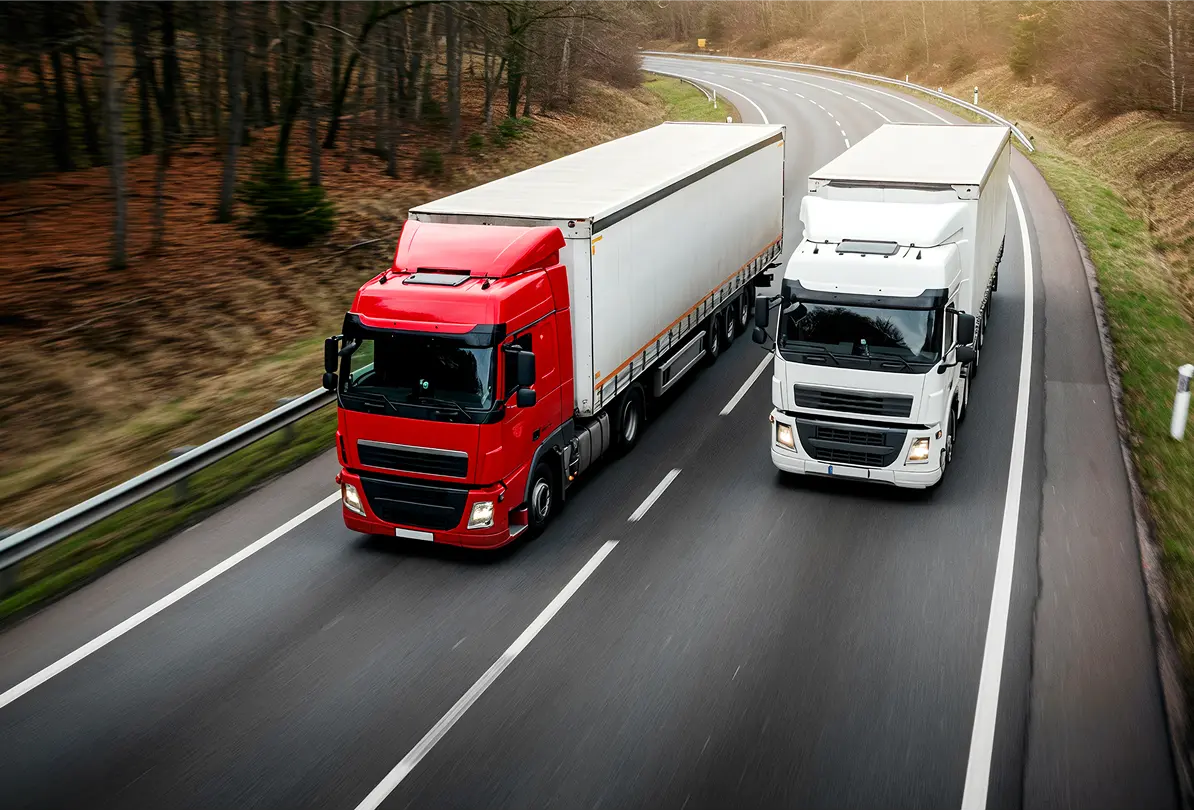
To organize transportation, we use our own fleet and a network of verified logistics partners. Our fleet includes 18 vehicles, including tractor units, tanker semi-trailers, and tipper semi-trailers. This allows us to work with different types of agricultural cargo: bulk raw material, processed products, and bulk liquid cargo.
Our own vehicles help us better control part of the logistics processes, while the partner network gives more flexibility for different routes, volumes, and international directions. This lets us select a transport solution for a specific task, rather than limiting the client to one standard option.
For the client, this means transportation can be planned with regard to the type of cargo, timelines, delivery geography, and receiving requirements at the destination. This is especially important during the season, when demand for transport rises and timely truck dispatch affects purchasing, processing, sales, or export.
During transportation, the vehicle is under 24/7 GPS monitoring. This makes it possible to track the route, delivery status, and vehicle movement in real time. For the client, this transparency matters because the cargo doesn't disappear from view after loading.
We monitor transportation at key stages: truck dispatch, loading, movement along the route, arrival at the destination, unloading, or transition to the customs stage. This support helps us respond faster to changes en route, clarify timelines, and coordinate the parties involved.
This is especially important for agricultural cargo. Sunflower, rapeseed, soybean, cake, oil, and agricultural waste all have different requirements for transportation, loading, and unloading. That's why route control, cargo condition monitoring, and communication between parties help reduce the risk of delays and misunderstandings.
We can provide comprehensive transportation support: from loading to the customs clearance stage. This is especially relevant for international logistics, where it's important to properly agree on the route, documents, timelines, cargo requirements, and the customs procedure.
At the loading stage, we agree on the location, time, contact persons, type of transport, cargo volume, and documents. We then support the movement of the vehicle, monitor the route, and coordinate communication between the parties. For export or import directions, customs clearance requirements are accounted for separately.
This format is convenient for clients who don't want to split logistics into several disconnected processes. When the route, transport, documents, GPS control, and customs stage are agreed within a single scenario, transportation runs in a more controlled way.
The cost of transportation is calculated individually. The price is affected by the route, distance, cargo type, batch volume, mode of transport, delivery timelines, seasonal load, international direction, and the need for additional support.
The minimum batch for transportation is 20 tonnes. This allows us to work in an industrial B2B format and tailor logistics to the client's actual volumes. Before starting the work, we clarify all the key parameters so the calculation is tied to a specific route, not to a nominal rate without details.
For the client, an individual calculation is convenient because it accounts for the specifics of their particular cargo. Transporting oil, cake, oilseed crops, or agricultural waste requires different transport and different route organization, so a universal price doesn't always reflect the real economics of delivery.
Transportation price matters, but it shouldn't be the only criterion for choosing a logistics partner. It's important for the client to understand whether the carrier has experience working with agricultural cargo, can select suitable transport, monitors the route, supports documentation, and is capable of handling international logistics.
A lower rate doesn't always mean better economics. If the transport doesn't match the cargo, there's no GPS control, documents aren't properly agreed, or route specifics aren't taken into account, the client may lose more on delays, downtime, postponed loading, or issues at the unloading stage.
Reliable transportation isn't just a truck on the right day. It's the organization of the entire route: from loading to cargo arrival, movement control, communication between parties, document support, and, when needed, coordination of customs clearance.
Working with us gives you agricultural product transportation in a comprehensive B2B format. We transport sunflower, rapeseed, soybean, cake, oil, and agricultural waste, work with batches from 20 tonnes, and organize delivery within Ukraine and international logistics.
For you, this means transportation is planned taking into account the cargo, route, timelines, documents, and transport requirements. We provide 24/7 GPS monitoring, support at key stages, individual cost calculation, and the option of comprehensive support from loading to customs clearance.
We work to make delivery as predictable as possible at any time of year: we agree on the route in advance, select transport, monitor movement, and maintain communication until transportation is complete. This format is convenient for clients who need not just a truck, but a responsible logistics partner for working with agricultural products.
.webp)

.svg)
.svg)