


Toll processing of sunflower: scheme, cost, accounting
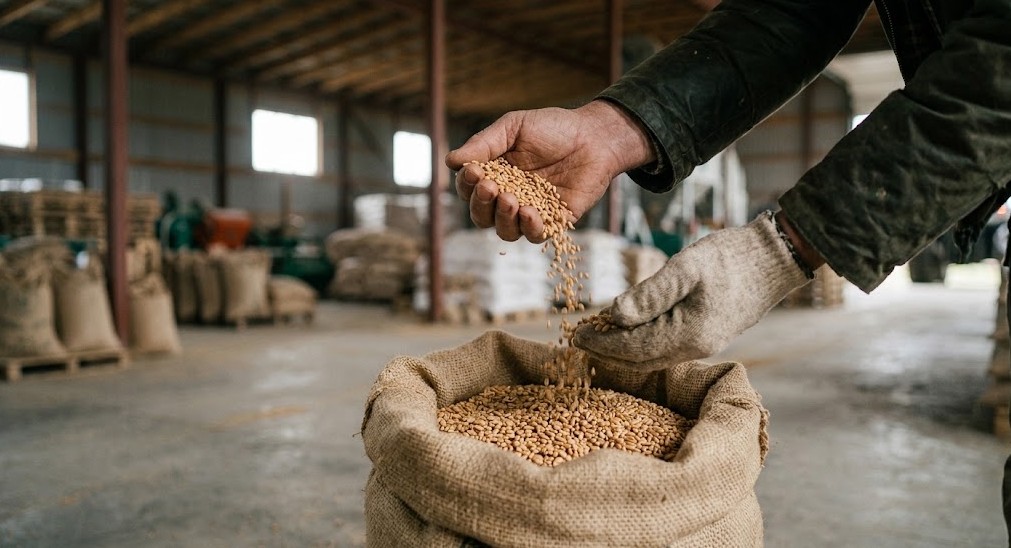
Toll processing of sunflower: scheme, cost, accounting
Toll processing gives the sunflower owner a different scenario than the usual sale of raw materials: the batch is transferred to the processor to perform an agreed technological cycle, and the result is evaluated based on the quantity and characteristics of the products obtained and the costs of processing.
Therefore, the key question here is not only “how much does it cost to process a ton.” Before starting work, it is necessary to record the mass and quality of raw materials, the technological scheme, the accounting procedure, the list of products, deadlines, logistics, and additional costs. It is these conditions that determine how predictable the result will be.
What is toll processing of sunflower seeds?
Under the tolling scheme, the customer transfers their own raw materials to the enterprise for processing. This differs from the usual sale of sunflower seeds, where the economic result for the seller is actually completed with the sale of seeds.
SeedWay Oil provides services for the processing of sunflower seeds and sunflower meal on a contractual basis.
Who might be interested in the tolling scheme?
This format may be practical for an agricultural producer with his own harvest or a trader who has a further sales channel for oil or feed products.
But the mere presence of sunflower does not make processing more profitable than direct sales. Two complete scenarios need to be compared.
In a tolling scenario, it is necessary to take into account the cost of processed products, plant service, logistics, possible storage, and other agreed costs.
Therefore, decisions should be made based on the economics of a specific batch, rather than on the general assumption that recycling is always more profitable.
What data is needed for preliminary calculation?
For a specific calculation, it is not enough to report only the tonnage. Important characteristics of the batch itself:
- volume of raw materials;
- oiliness;
- humidity;
- impurity content;
- location of the party;
- desired processing period;
- requirements for further shipment of products.
That is why the query "sunflower oil processing - price per ton" without batch characteristics does not give a complete answer. The tariff for the operation is only one component of the overall calculation.
How sunflower seeds are processed
Acceptance and control of raw materials
At the input, it is necessary to record the batch quantity and its actual characteristics. This is especially important for a tolling scheme: the subsequent result must be compared with what raw materials actually entered the production.
At SeedWay Oil, the receiving system is automated, truck scales are used, and the quality of raw materials and finished products is controlled by our own production and technological laboratory.
Seed preparation
Before the seeds are pressed, they undergo several technological operations. At SeedWay Oil, the kernel is separated from the husk, the material is divided, rolled, and fed into a roaster for heat and moisture treatment.
Heating and humidification with steam prepare the material for mechanical oil extraction.
Mechanical pressing
The prepared material is fed into oil presses. At this stage, a significant portion of the oil is mechanically extracted, and after pressing, a solid oil-containing product remains - cake.
The SeedWay Oil press shop uses four A9-MPSh-20-2 presses and Zh-200 and Zh-120 roasters.
Extraction
If the process involves further extraction, the residual oil is extracted from the material after pressing using a solvent. SeedWay Oil uses a YJP500 rotary extractor, and the solvent operates in a closed production cycle.
After the full pressing and extraction cycle, the official SeedWay Oil production guide lists sunflower meal as a by-product. This is an important distinction: cake corresponds to the stage after mechanical pressing, and meal is the product after deeper oil extraction.
What does the customer receive after processing?
According to SeedWay Oil's production documentation, the result of the full cycle of seed processing is unrefined sunflower oil, sunflower meal, and husk. The cake is formed after mechanical pressing, but in the press-extraction scheme it is further processed for extraction.
Therefore, even before the batch is transferred, it is necessary to agree on which technological scheme is used and which products are transferred to the customer as a result. This should be clear not from a verbal agreement, but from the terms of the contract and documents for the operation.
What does oil yield depend on?
There is no fixed amount of oil from each ton of sunflower. Two batches of the same mass may have different oil content, moisture content and impurities, and therefore different processing potential.
SeedWay Oil’s technological materials provide a specific example: with an oil content of 46%, the estimated yield from 1,000 kg of seeds is about 455 kg of oil. According to the company, the technology allows for the extraction of up to 98.9% of the oil contained in the seeds.
This is not a universal norm for any batch: the forecast must be based on the laboratory characteristics of a specific raw material.
What does the cost of toll processing depend on?
When estimating costs, it is important not to reduce the entire economy to a single tariff per ton. The overall budget can be affected by:
- volume and condition of raw materials;
- selected technological scheme;
- the need for additional training;
- laboratory control;
- storage;
- sunflower delivery;
- shipment of oil and related products;
- other agreed operations.
What exactly is included in the basic cost of the service and what is calculated separately should be specified in the commercial offer and contract. There is no universal tariff or single formula for all batches in the available SeedWay Oil database, so it would be incorrect to name one “sunflower processing price” without source data.
How are raw materials and products accounted for?
The tolling scheme requires clear recording of the movement of raw materials and the results of processing.
At the entrance, the quantity and characteristics of the received batch must be recorded. After the production cycle, the quantity of finished and related products according to the agreed scheme. The procedure for documentation, taking into account technological losses and transferring the result to the customer is determined by the terms of the operation and primary documents.
At SeedWay Oil, accounting for raw materials and finished products is carried out taking into account the regulations and recommendations of the order of the Ministry of Agrarian Policy of Ukraine No. 656 dated September 11, 2009. For documentation, the company uses forms containing mandatory details stipulated by regulatory acts.
What needs to be agreed upon before the transfer of the lot
The greatest uncertainty arises not in the pressing or extraction itself, but in conditions that the parties did not record before the work began.
Before transferring raw materials, it is worth agreeing on the following:
- quantity and quality indicators of the batch;
- the method of their determination;
- technological scheme;
- the principle of calculating the output;
- list of products that the customer receives;
- cost of basic and additional operations;
- deadlines or production schedule;
- accounting rules;
- storage and shipment conditions of products.
It is worth separately recording how the parties act if the actual characteristics of the raw materials differ from those previously declared or change the predicted result.
The more precisely these provisions are described before the batch is launched into production, the easier it is to later compare the actual result with the agreed conditions.
Minimum batch, deadlines and quality control
The minimum volume of a consignment is not specified in the available SeedWay Oil materials, so it must be specified for a specific application.
There is also no fixed universal processing time. It may depend on the volume, production schedule, and agreed technological scheme. The daily rate of the enterprise is up to 150 tons of sunflower seeds, but this figure characterizes the production capacity and is not automatically the deadline for completing an individual order.
The quality of raw materials and products is controlled by the company's own VTL. For a preliminary calculation of toll processing, it is advisable to transfer the batch volume, its location and current laboratory indicators. On this basis, it is already possible to objectively coordinate the technological scheme, logistics, cost and work procedure.
.webp)
Fill out the form and we'll get in touch with you!
Contact Information

.svg)
.svg)

.svg)